



Building an Everyday Childhood—While Planning for the Future
Building an Everyday Childhood—While Planning for the Future
As parents, we want the best for our families. We want our kids to learn, make friends and have fun. But when your child has a disability, your calendar can be filled with appointments, therapies and meetings. You’ll do everything to help your child reach their potential. Sure, therapies and early intervention are important. But helping our kids enjoy an everyday childhood is powerful. Our children can build relationships, skills and interests that last a lifetime.
So how do we help our kids thrive today while also planning for their future? Start by dreaming. Connect with community. And start to focus on finances. Read on for practical ideas, resources and advice from parents who have been there.
DREAM BIG
DREAM BIG
As parents, when our children are young, we have big dreams for their lives. As they grow and learn, their dreams will become their own. As parents of a child with a disability, we can fall in to a trap of letting uncertainty about the future diminish our dreams.
The reality is that the bigger we dream, the more we’re likely to make choices that help move our sons and daughters towards those dreams.
A good place to start is to create and write down your vision for your child's future. Here are some steps to help you get started.
Check off any that apply and add your own.
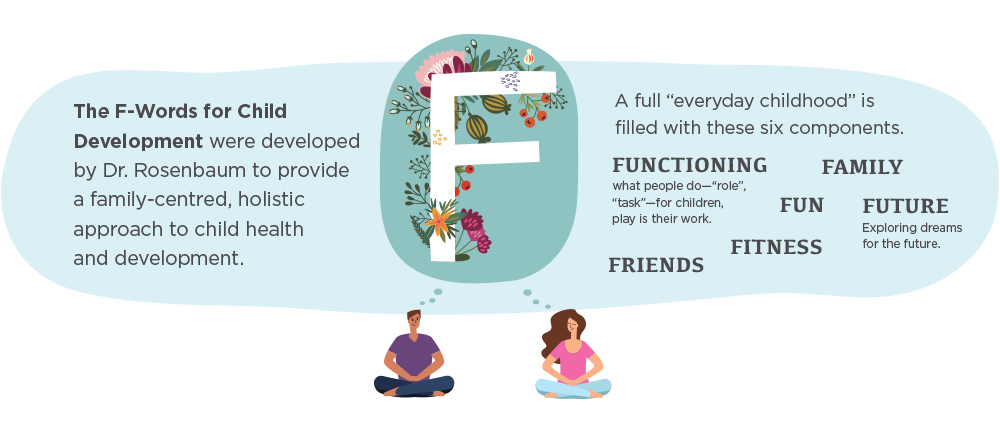
❑ caring
❑ connectedness
❑ creativity
❑ family
❑ joy
❑ learning
❑ purpose
❑ spirituality
❑ other values
Keep in mind your values and your child’s unique qualities.
-
- Examples of vision statements:
- Short and simple: Jennifer will have the same opportunities at home, school and in our community as her brother and sister.
- Detailed and broader: Jennifer will enjoy a life filled with caring, reciprocal friendships and relationships. She will attend her neighbourhood school and will have a similar education to her peers. She will experience learning, employment, and recreation based on her strengths and interests. She will give back to her community using her gifts and talents.
- Examples of vision statements:
-
- Example: If your vision includes a life of caring friendships, what is one step you can take to work towards achieving that vision?
- Action Example: Contact the local Scouts Group leader to ask about registering for Cub Scouts.
- Action Example: Contact the local Scouts Group leader to ask about registering for Cub Scouts.
- Example: If your vision includes a life of caring friendships, what is one step you can take to work towards achieving that vision?
Countless studies show that close relationships are vital for mental and physical health throughout our lives. Starting when our kids are young, there are many ways to spark friendships. Try these ideas:
- Explore community based, inclusive programs and centres. Check out places like the YMCA, EarlyOn Child and Family Centres, public libraries and community recreation centres. Many have free or low-cost play groups, story hours and drop-in programs. Meet other parents while your child interacts with kids their own age.
- Expose your child to a new structured, play-based activity. As your child tries various programs, they discover what they like. At the same time, they build skills, confidence and friendships.
The possibilities are endless, such as programs in art, sport, music or nature.
Contact the instructor before the program begins. That way, you can suggest ideas for successfully including your child. Plus, you can help your child know what to expect at the activity.
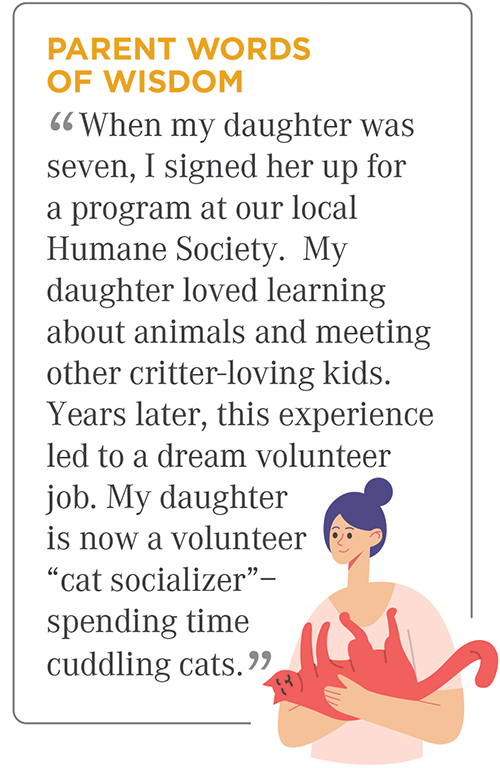
- Get to know your child’s instructors. Your child’s life is enriched by the presence of other caring adults. Some nursery school instructors, camp counsellors, music teachers, etc., may have a strong connection to your child. Stay in touch with them. In time, you might invite these caring adults to be part of your child’s support network
-
Get involved in your community
Volunteer: Do you have a passion for music, the environment or live theatre? Try volunteering as a family at a music festival or at an Earth Day park-clean up. Then, set up a playdate or family potluck picnic with people you’ve met through volunteering.
Be neighbourly: Walk around your neighbourhood with your child. Stop and chat with neighbours. Introduce yourselves. Often neighbours haven’t met—even after living together for years on the same street or apartment floor. Time to break the ice and learn each other’s names.
Drop off cookies, home-made soup or cut flowers from your garden. Offer to water your neighbour’s plants while they’re away. These exchanges help build your child’s interpersonal skills. Plus, you’re increasing the circle of people living nearby who know and care about your child.
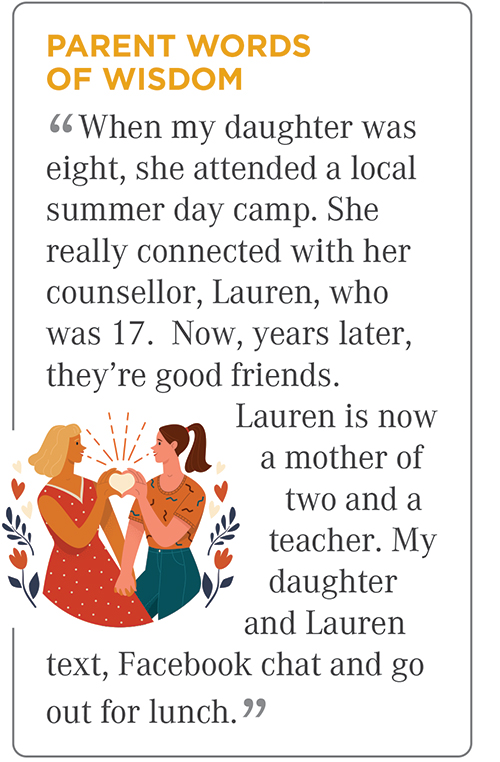
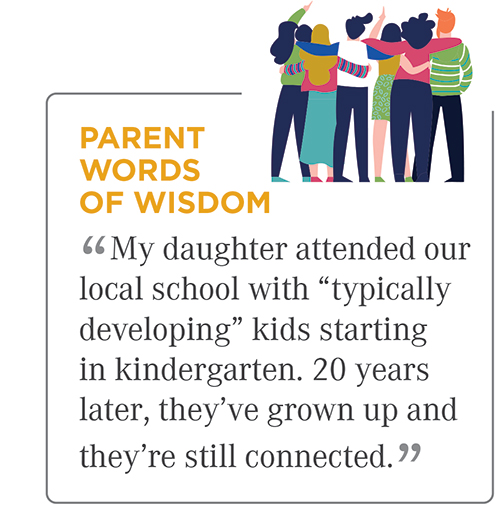
One of the best ways to connect with friends and other families is at your local school. A big part of an everyday childhood is an everyday school life. Here are parent-tested tips for helping your child transition to school:
- Get to know your neighbourhood schools. Attend open houses and ask to arrange a tour. Ask your neighbours about their kids’ experiences at different schools.
- Find out your School Board’s policy on school attendance. Some Boards allow families to choose specific schools. Others require students to attend the public or separate school within a designated area of streets.
- Once you’ve chosen a school, arrange a meeting with the school principal and your child’s teacher. To introduce your child, consider sharing:
-
- An “All About Me” book made together with your child. Show (with words and/or photos)your child’s interests, favourite foods, people and activities. Include a section on your child’s strengths and challenges. Strategies for helping your child deal with transitions or frustrations are also helpful.
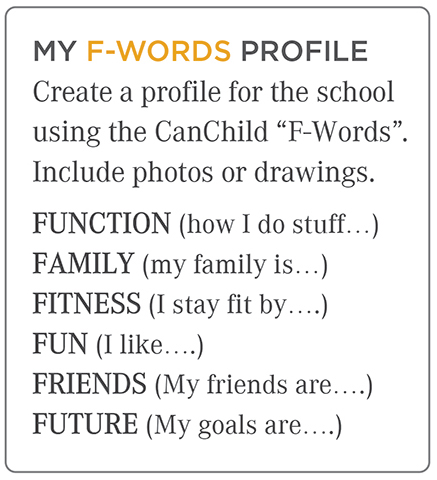
- Ask your child’s teacher how they would like to keep in touch. A communication book or weekly email can help you support your child’s learning.
- Learn about the IEP (Individualized Education Plan) for your child’s education. It shows how the curriculum and/or teaching strategies will be changed to meet your child’s learning needs.
- The teacher and support staff (educational assistant, resource teacher) create an IEP each year with your input. Attend all IEP meetings to make sure your child receives a curriculum-based education and has social opportunities at school. Having your child’s support team (family friend, grandparent, planner/facilitator etc.) at IEP meetings is also helpful.
- Prepare your child for the school transition.
- Your child can practice carrying their backpack, opening lunch bag containers and zipping up their coat.
- Ask to visit your child’s classroom and teacher before school starts. Take photos of the classroom and different activity centres.
- Make a picture book or social storytelling for your child on what to expect each day.
- Be a school supporter. School life is a great way for your whole family to get connected. When possible, show up for school assemblies, Fun Fairs and school council meetings. It can be easier to advocate for your child when you’re known as a family that gives back and gets involved.
- Special Education in Ontario
- "If Inclusion is for Everyone, Why Not Me?" Community Living Ontario -
- The IEP: A Guide for Parents, York Region District School Board. Clear information about the IEP for Ontario Students
FINANCES & THE FUTURE
FINANCES & THE FUTURE
How can you plan for the future when so much is unknown?
You wonder about your son or daughter as an adult:
- How much help/support will they need?
- How will they financially support themselves?
- What government supports and funding will be available?
Fortunately, you CAN plan ahead. Starting early helps build a financial foundation for your child.
Here’s how:
- Apply for your child’s Social Insurance Number.
- Apply for the Disability Tax Credit (Form T2201) with Canada Revenue Agency. This credit reduces the amount of tax owed by a person to the government. If you qualify for the Disability Tax Credit, you may receive the Canada Child Disability Benefit. If you would like assistance completing the application, visit P4P's Service Navigation Page.
- Open and contribute to a Registered Disability Savings Plan (RDSP) for your child. The RDSP is a long-term savings plan made available by the federal government for people with disabilities. It can hold personal contributions plus grants and bonds received from the Canadian government. Over time, an RDSP can grow into a significant financial asset for your child to use later in life. The RDSP will not impact provincial disability benefits like ODSP. Partners for Planning offers Introductory RDSP Webinars monthly.
- Find out if you qualify for these other sources of funding:
- Assistance for Children with Severe Disabilities (ACSD): This financial aid supports the extra expenses associated with having a child with a disability.
- Special Services at Home (SSAH): This program is centred around community involvement and participation. It offers assistance for children, families, and caregivers with the child's day-to-day activities, the child's growth and development activities, and support for parents and caregivers. SSAH is not income-tested, unlike ACSD.
- Your own city/town subsidies to cover costs for recreational programs, summer camps or daycare/nursery school programs.
- Local service clubs or organizations that may fund special equipment.
- Disability specific charitable organizations that offer subsidies or grants.
Additional Financial Resources:
P4P's Financial Services Directory
Jordan’s Principle: Funding for First Nations Children to access products, services and supports
Helping your child enjoy an everyday childhood takes planning and effort—but it’s well worth it. Start with your hopes and dreams. Celebrate your child’s strengths, interests and abilities.
Then explore what your community has to offer. When our kids enjoy a full life, they’re on their way to enjoying a rich “everyday life” when they grow up.
Be sure to connect with others along the way. Reach out to other parents to share experiences, wisdom and strategies. Speaking to someone who really “gets it” is priceless. And those friendships can last a lifetime.
Resources for Connecting:
Family Networks Directory
ConnectABILITY Family Support Groups
Autism Ontario Family Supports
Find an Infant and Child Development Program in your area - OACID Directory